General Election: June 28, 2021 Candidates for Tribal Council
RICKY COMPO
TAMARA KIOGIMA
LEROY SHOMIN
DOUG EMERY
WILLIAM ORTIZ
MARCI REYES
KENNETH DEWEY
AARON OTTO
SHARON SIERZPUTOWSKI
SIERRA BODA (WITHDREW 5-14-21)
DOC Mission Statement:
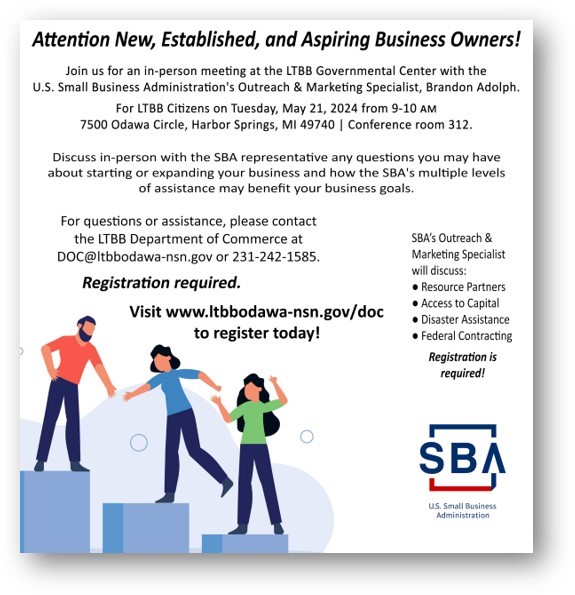
The LTBB Department of Commerce is responsible for encouraging and regulating business within the LTBB jurisdiction, administration of the LTBB/State of Michigan Tax Agreement, administration of the LTBB Energy Improvement Program, administration of the LTBB Hotel Room Tax, and serving as a resource and liaison for LTBB-affiliated businesses and LTBB Resident Tribal Members. Service is provided in a well-organized, user-friendly manner that encourages, facilitates, and regulates economic opportunity within the LTBB jurisdiction.
DOC Vision Statement:
To promote opportunities for a thriving, environmentally sound economy that fuels a healthy community for the next seven generations.
Department of Commerce (DOC) Functions:
The Department of Commerce (DOC) is responsible for the following:
The Form 4013: Resident Tribal Member Annual Sales Tax Credit is now available upon request from the LTBB Dept of Commerce office for the 2023 tax year. Most programs used for e-filing taxes, or programs used by professional tax preparers, will automatically generate the Form 4013 upon selecting that you were a Resident Tribal Member during the applicable tax year. However, for those who do not e-file or do not use a tax preparer, or those who prefer to have a paper copy of the Form 4013 – please contact the LTBB Dept of Commerce office to request that a copy is mailed or emailed to you. The LTBB Dept of Commerce can be reached at 231-242-1584 or DOC@ltbbodawa-nsn.gov.
*The Form 4013 is used to obtain the annual sales tax credit per our Tax Agreement with the State of Michigan. The form is filed with your Michigan Income Taxes and the credit is given based on a formula using your adjusted gross income and # of months you resided within the LTBB Tax Agreement Area. It is to your advantage to submit this form so that you may receive your annual credit. If you have any questions on this form, including how to submit – please contact the LTBB Dept of Commerce office. Miigwech. – Hayden Hooper, LTBB Department of Commerce Director.
The LTBB Department of Commerce (DOC) is excited to announce that we have successfully negotiated a 5th Amendment to our LTBB/State of Michigan Tax Agreement! Effective August 1st, 2023 if you are looking to move into the Tax Agreement Area, there are now sales/use tax exemptions that could apply to your purchase before you move in. This includes sales/use tax exemptions on a modular/mobile home purchase or sales/use tax exemptions on permanent home improvement/renovation items. There is also an updated exemption for our current Resident Tribal Members. Please see below:
Please contact DOC for complete details, requirements, and new forms related to these exemptions. Information will also be available on the LTBB DOC web page. For any questions, please contact DOC at 231-242-1584 or DOC@ltbbodawa-nsn.gov. We are very excited to bring these additional benefits to our Tribal Citizens! Miigwech.
LTBB Tribal Citizen-owned businesses wishing to be emailed of various business opportunities within the LTBB government or LTBB-owned enterprises should contact the LTBB Department of Commerce to provide an email address in which they would like to be contacted and include a brief statement of what their business offers. Business owners can also use the following link to provide their business information: LTBB Department of Commerce List Serve Registration (formsite.com).
LTBB DOC will reach out to these businesses directly when departments or entities ask for their business opportunities to be shared.
Miigwech.
Corporations (For-Profit or Non-Profit):
WOS 2003-07 Comprehensive Business Codes
Application to Register a Non-Profit Corporation
Application to Register a For-Profit Corporation
For-Profit And Non-Profit Corporation Fee Schedule
Limited Liability Companies (LLCs):
WOS 2020-005: Limited Liability Company Code
Application to Register a Limited Liability Company
Template for Articles of Organization
Certificate of Amendment to Articles of Organization
Limited Liability Company Articles of Dissolution
Limited Liability Company Fee Schedule
Doing Business As (DBA):
WOS 2006-009: Business Assumed Name Act
REG WOS 2006-009: Business Registration Regulations
Application for DBA
Notice of Dissolution – DBA
List of Active Tribal Notaries
COMPLETE ONLINE PAYMENTS FOR DBA FILING FEES HERE
Energy Improvement Program:
WOS 2021-014 Energy Improvement Program Statute
REG-WOS 2021-014-03172022-001
REG-WOS 2021-014 07142022-001
Energy Improvement Program Application for Third-Party Financing
Letter of Lender Consent for LTBB Energy Improvement Program
Credit History Report Waiver for LTBB Energy Improvement Program
Hotel Room Tax:
WOS 2024-001 Hotel Room Tax
REG-WOS 2024-001 041824-02: Hotel Room Tax Regulations
Monthly Hotel Room Tax Form
Monthly Hotel Room Tax Exemption Certificate
Monthly Hotel Room Tax Hearing Request Form
Tax Agreement Documents:
LTBB Tax Agreement – Codified through 5th Amendment
LTBB Tax Agreement – Original
LTBB Tax Agreement – 1st Amendment
LTBB Tax Agreement – 2nd Amendment
LTBB Tax Agreement – 3rd Amendment
LTBB Tax Agreement – 4th Amendment
LTBB Tax Agreement – 5th Amendment
LTBB Tax Agreement – Appendix A
Map of Tax Agreement Area
Map of Tribal and Trust Lands
Tax Agreement Forms:
Request for Tribal Certificate of Exemption (TCE) Form – CURRENT Resident Tribal Members
Request for TCE Form – FUTURE Resident Tribal Members – Modular/Mobile Home Purchase
Request for TCE Form – FUTURE Resident Tribal Members – Home Improvement/Renovation/Construction Items
Tax Agreement Information:
Frequently Asked Items for TCEs – Eligible and Ineligible Purchases
How to Obtain a Tribal Certificate of Exemption (TCE)
Information on the Form 4013: Resident Tribal Member Annual Sales Tax Credit
Link (directly below) to the State of Michigan’s web page for FAQs on the Form 4013:
https://www.michigan.gov/taxes/0,4676,7-238-75545_43867—,00.html
LTBB Tribal Citizen Vendors:
LTBB Tribal Citizen Vendors – Request to be Added
Hayden Hooper
Department of Commerce Director
7500 Odawa Circle
Harbor Springs, Michigan 49740
Phone: 231-242-1584
Cellular: 231-420-2924
Email: DOC@ltbbodawa-nsn.gov
Nathan Burns
Economic Recovery Coordinator
7500 Odawa Circle
Harbor Springs, Michigan 49740
Phone: 231-242-1585
Cellular: 231-330-4133
Email: nburns@ltbbodawa-nsn.gov
RICKY COMPO
TAMARA KIOGIMA
LEROY SHOMIN
DOUG EMERY
WILLIAM ORTIZ
MARCI REYES
KENNETH DEWEY
AARON OTTO
SHARON SIERZPUTOWSKI
SIERRA BODA (WITHDREW 5-14-21)
BERNADECE (BERNIE) BODA & LINDA GOKEE
REGINA GASCO-BENTLEY & STELLA KAY
(Click Team To Read Their Statements)
BERNADECE (BERNIE) BODA & LINDA GOKEE
REGINA GASCO-BENTLEY & STELLA KAY
(Click Candidate Name To View Their Statement)
Search Code Index
function search(string){ window.find(string); }
LTBB Events
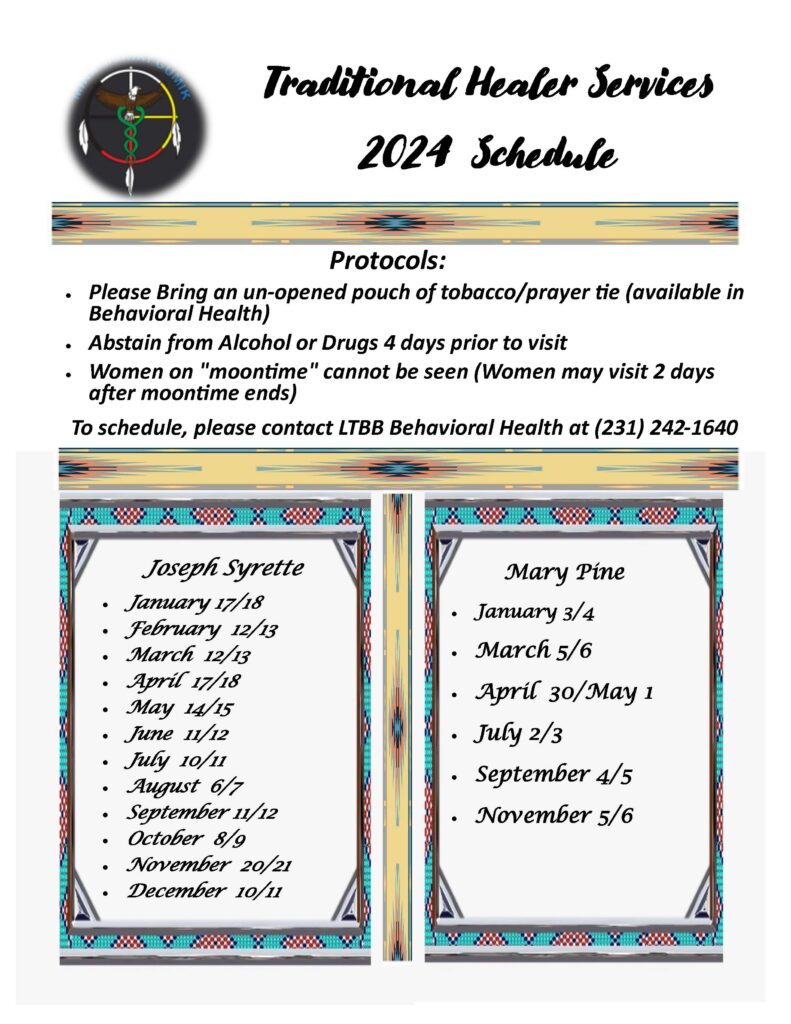
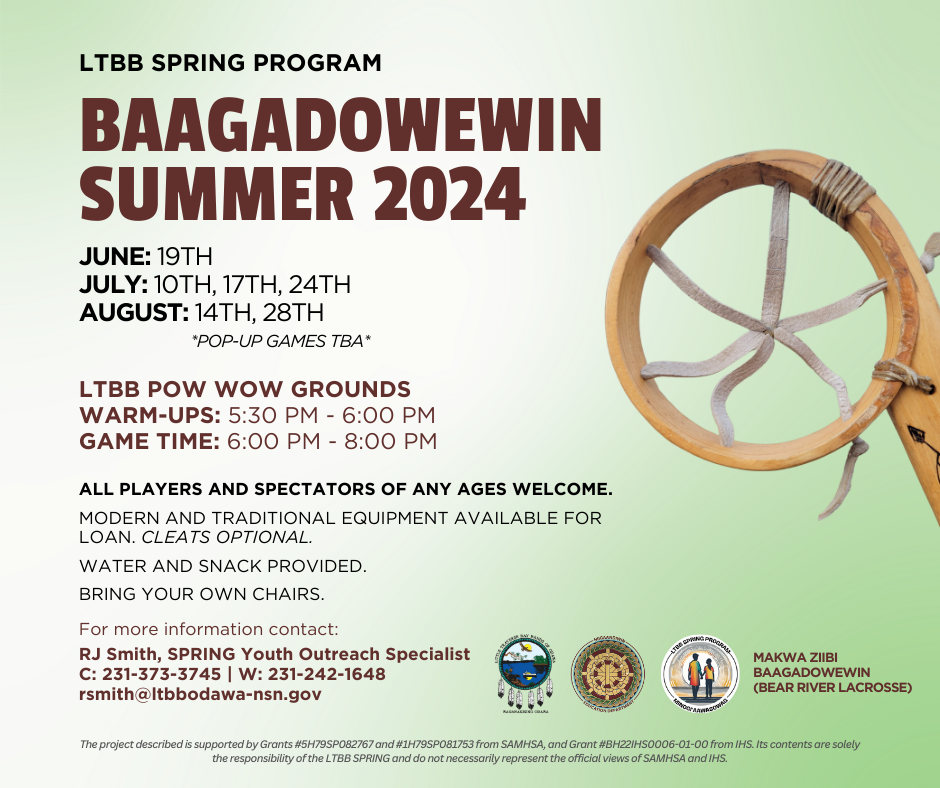
Sun Mon Tue Wed Thu Fri Sat Traditional Healer Services – Joseph Syrette Executive Town Hall Meeting 10:00 AM Executive Town Hall Meeting Jul 10 @ 10:00 AM – 12:00 PM 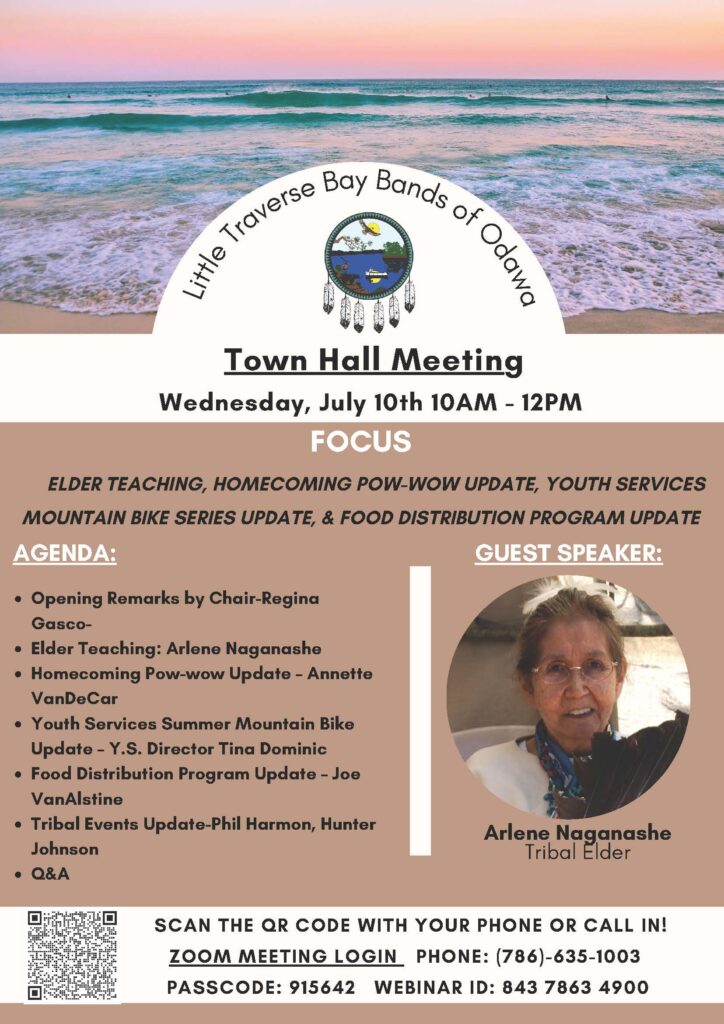 Webinar ID: Webinar ID: 843 7863 4900 https://ltbbodawa.zoom.us/j/84378634900?pwd=My95SkdVUWtMVFRHRUt0b2lUNnExdz09 Lacrosse Games 5:30 PM
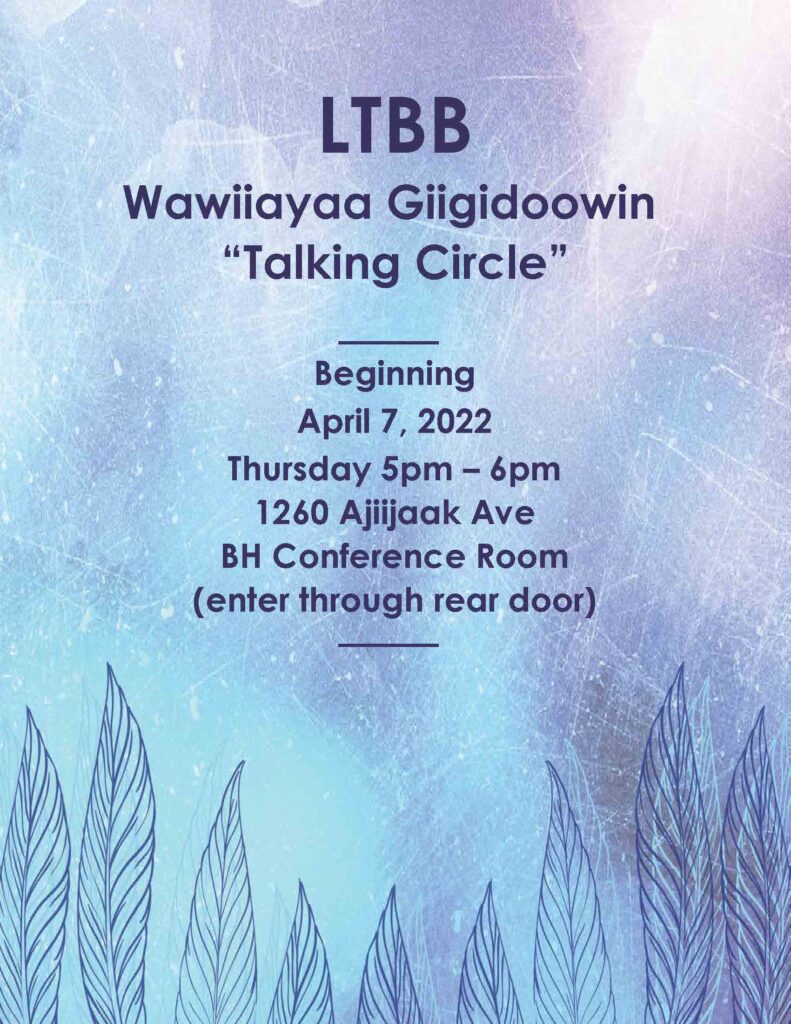
 Anishinaabemto Gdobinoojinhim! – Speak the Language to your child! 3:00 PM Anishinaabemto Gdobinoojinhim! – Speak the Language to your child! Jul 18 @ 3:00 PM – 5:00 PM 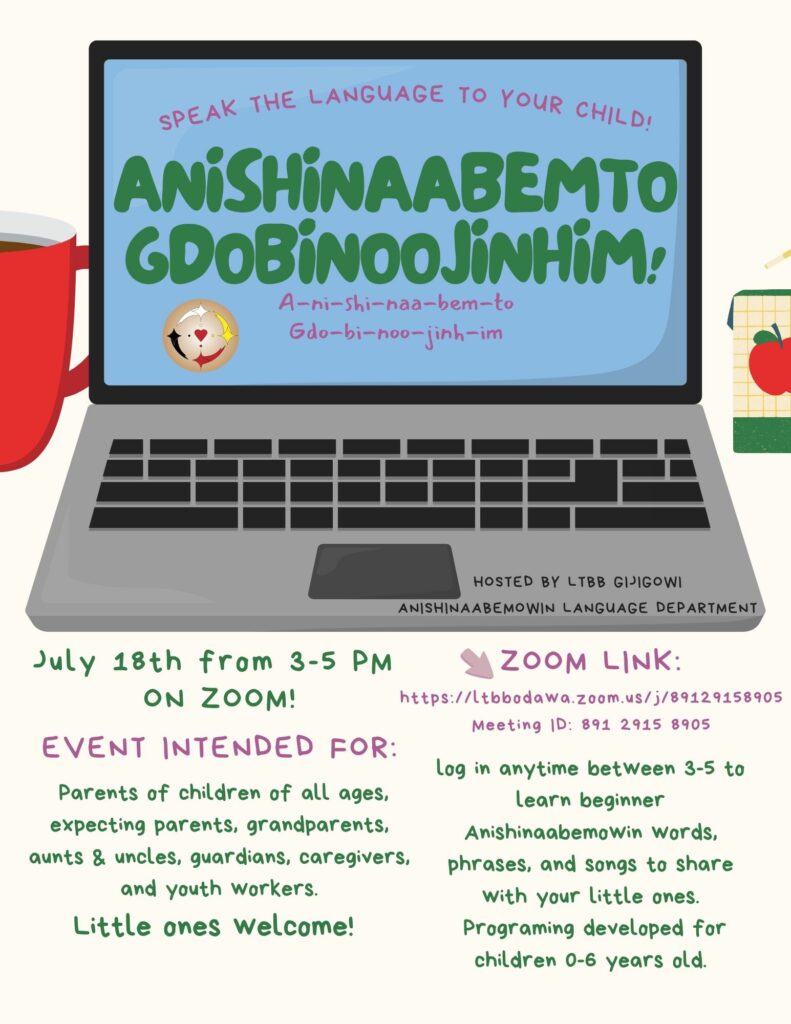 Join Zoom Meeting https://ltbbodawa.zoom.us/j/89129158905 Meeting ID: 891 2915 8905 One tap mobile +16513728299,,89129158905# US (Minnesota) +17866351003,,89129158905# US (Miami) Dial by your location +1 651 372 8299 US (Minnesota) +1 786 635 1003 US (Miami) +1 929 205 6099 US (New York) +1 267 831 0333 US (Philadelphia) +1 301 715 8592 US (Washington DC) +1 312 626 6799 US (Chicago) +1 470 250 9358 US (Atlanta) +1 470 381 2552 US (Atlanta) +1 646 518 9805 US (New York) +1 971 247 1195 US (Portland) +1 213 338 8477 US (Los Angeles) +1 253 215 8782 US (Tacoma) +1 346 248 7799 US (Houston) +1 602 753 0140 US (Phoenix) +1 669 219 2599 US (San Jose) +1 669 900 6833 US (San Jose) +1 720 928 9299 US (Denver) Meeting ID: 891 2915 8905 Find your local number: https://ltbbodawa.zoom.us/u/kcUUIIcQM Talking Circle 6:00 PM
 Subscribe to filtered calendar
Contact SPRING
[ninja_form id=12]
https://app.hellosign.com/s/LJki90VA